Kenya, Rwanda and Tanzania Rank Among the World's Top 10 Wildlife Destinations in the 2026 Wanderlust Travel Awards
East Africa has strengthened its position as one of the world's leading wildlife tourism regions after Kenya, Rwanda and Tanzania secured places among the ten most desirable destinations for nature and wildlife in the 2026 Wanderlust Reader Travel Awards.
Three East African countries have been recognised among the world's ten most desirable destinations for nature and wildlife in the 2026 Wanderlust Reader Travel Awards, reinforcing the region's international appeal to travellers seeking extraordinary animal encounters, protected natural landscapes and conservation-focused holidays.
Kenya secured fourth position globally, followed closely by Rwanda in fifth place, while Tanzania ranked eighth in the Most Desirable Destination for Nature & Wildlife category.
The results place East Africa alongside some of the world's most celebrated nature destinations and demonstrate the strength of a region that offers everything from the Great Migration across the Serengeti–Mara ecosystem to mountain gorilla trekking in the forests of Rwanda.
South Africa received the gold award in the category, followed by Brazil in second place and Australia in third.
The awards were determined through reader voting rather than an assessment of visitor arrivals, tourism earnings or the number of wildlife species found in each country.
According to Wanderlust, the 2026 awards attracted 251,461 participating readers, who cast more than 8.2 million votes across the awards' various categories.
For Kenya, Rwanda and Tanzania, the recognition provides a significant destination-marketing opportunity, particularly as international travellers increasingly seek holidays that combine wildlife viewing, distinctive natural environments and meaningful conservation experiences.
East Africa's position in the global wildlife rankings
These are reader-voted destination rankings, not wildlife population rankings.
The results are particularly notable because the three countries offer different wildlife tourism experiences.
Kenya is internationally associated with classic savannah safaris, large mammals and the Maasai Mara.
Rwanda has built a distinctive tourism identity around mountain gorilla conservation, rainforest experiences and carefully managed high-value tourism.
Tanzania is home to the Serengeti, Ngorongoro, Mount Kilimanjaro and an extensive national park network that includes remote wilderness destinations beyond the traditional northern safari circuit.
Together, they provide a compelling case for East Africa as a region where travellers can experience multiple ecosystems and wildlife encounters within one extended holiday.
Kenya: Fourth globally and East Africa's highest-ranked wildlife destination
Kenya's fourth-place position makes it the highest-ranked East African destination in the 2026 nature and wildlife category.
The recognition reflects the country's strong international identity as a safari destination, supported by an extensive network of national parks, national reserves, private conservancies and community-managed wildlife areas.
Kenya's appeal is built around several contrasting ecosystems, from the open grasslands of the Maasai Mara to the elephant landscapes of Amboseli, the semi-arid wilderness of Samburu and the marine environments of the Indian Ocean coast.
Maasai Mara: The classic African safari
The Maasai Mara National Reserve is one of Africa's most recognised wildlife destinations.
Its rolling grasslands support lions, cheetahs, leopards, elephants, buffaloes and numerous antelope species. The reserve also forms part of the wider Serengeti–Mara ecosystem, which supports the annual movement of vast wildebeest and zebra herds.
Between approximately July and October, migration activity often attracts considerable attention to the Kenyan side of the ecosystem, although timing varies with rainfall, grazing conditions and herd movements.
River crossings are unpredictable natural events. Travellers should not assume that visiting during a particular week guarantees witnessing one.
For visitors seeking a more exclusive experience, conservancies adjoining the main reserve may offer accommodation and activities under different management arrangements. The exact experiences permitted depend on the conservancy and operator.
Amboseli: Elephants beneath Kilimanjaro
Amboseli National Park offers one of the most recognisable landscapes in African wildlife photography.
Large elephant herds move across open plains and wetlands, while Mount Kilimanjaro rises beyond the park across the border in Tanzania.
Amboseli is particularly attractive to photographers and travellers interested in elephant behaviour.
The mountain is not always visible because clouds can obscure its summit, but clear mornings may provide striking views.
The park also offers opportunities to observe buffaloes, giraffes, zebras and numerous bird species.
Samburu: Wildlife in Kenya's northern landscapes
Samburu National Reserve provides a different safari environment.
Its semi-arid landscapes, riverine vegetation and distinctive wildlife make it an attractive option for travellers who want to venture beyond Kenya's most frequently visited safari circuit.
Among the animals associated with the region are Grevy's zebra, reticulated giraffe, gerenuk and Beisa oryx.
These species offer a contrast to the wildlife commonly encountered in southern Kenya.
The region is also culturally significant, with opportunities to learn about Samburu traditions through appropriately organised community experiences.
Kenya's conservation tourism model
Kenya's wildlife tourism depends on more than the protection of animals inside national parks.
Community conservancies and private conservation areas play important roles in maintaining wildlife habitats and corridors.
Some tourism enterprises work with local landowners and communities through employment, conservation fees and revenue-sharing arrangements.
These approaches can create economic incentives to protect wildlife habitats, although the effectiveness of individual programmes varies.
Travellers interested in responsible tourism should investigate how their chosen accommodation and operator contribute to local conservation and community livelihoods.
For Kenya, the Wanderlust recognition offers an opportunity to promote not only famous wildlife encounters but also the conservation partnerships that help sustain them.
Rwanda: Fifth globally, with mountain gorillas at the heart of its wildlife appeal
Rwanda secured fifth position in the global nature and wildlife ranking, placing it immediately behind Kenya.
The recognition is particularly significant for a country that has developed a distinctive international tourism identity centred on conservation, mountain gorilla trekking and carefully managed visitor experiences.
Unlike the expansive savannah circuits commonly associated with Kenya and Tanzania, Rwanda offers a combination of volcanic mountains, montane forests, wetlands and savannah habitats within a relatively compact geographical area.
Volcanoes National Park: Meeting mountain gorillas in their natural habitat
Volcanoes National Park is Rwanda's most internationally recognised wildlife attraction.
Situated in the country's northwest, the park protects part of the Virunga mountain ecosystem, which extends across Rwanda, Uganda and the Democratic Republic of the Congo.
The park is famous for its mountain gorillas, one of the world's most closely monitored and protected great ape populations.
Visitors participating in authorised gorilla trekking programmes travel through forest terrain with trained guides and trackers.
The experience involves locating a habituated gorilla family and observing its behaviour under strict conservation rules.
The walk may take several hours, depending on the animals' location and the condition of the trails.
Gorilla trekking is carefully regulated, with limits on visitor numbers and the time spent with the animals.
These restrictions are intended to reduce disturbance and help protect gorillas from human-transmitted illnesses.
Nyungwe: A different side of Rwanda's wildlife
Nyungwe National Park introduces visitors to a different ecosystem.
The park protects extensive montane rainforest and supports chimpanzees, several other primate species and a remarkable variety of birds.
Visitors can explore authorised forest trails, participate in guided primate experiences and enjoy the park's canopy walkway.
Nyungwe is particularly suitable for travellers interested in forest ecology, birdwatching, hiking and biodiversity.
It also offers a useful contrast to gorilla trekking in Volcanoes National Park.
Akagera: Rwanda's savannah safari destination
Akagera National Park demonstrates that Rwanda's wildlife tourism extends beyond forests.
Located near the country's eastern border, Akagera combines grasslands, woodlands, lakes and wetlands.
The park supports elephants, buffaloes, giraffes, lions, rhinoceroses and numerous bird species.
Its conservation history includes wildlife reintroductions and partnerships intended to restore and protect the ecosystem.
For visitors who want to combine gorilla trekking with a traditional game-drive safari, Akagera offers an option within Rwanda.
Rwanda also recognised for sustainable tourism
Rwanda's achievements in the 2026 Wanderlust Awards extend beyond the nature and wildlife category.
The country also ranked seventh globally in the Most Desirable Destination for Sustainability category.
Germany received the gold award, followed by Switzerland and the Netherlands.
Rwanda's inclusion in this separate ranking reinforces its international profile among readers interested in responsible travel.
However, the awards reflect reader preferences and perceptions. They should not be confused with an independent certification of a country's overall environmental performance.
For travellers, the practical opportunity is to explore conservation-focused experiences while examining how tourism operators support protected areas and surrounding communities.
Tanzania: Eighth globally, with one of Africa's most diverse wildlife landscapes
Tanzania secured eighth position in the Wanderlust nature and wildlife ranking, adding another international recognition to a destination whose wildlife experiences extend from the Serengeti's open plains to the remote forests of western Tanzania.
The country has long been associated with some of Africa's most celebrated protected landscapes, including Serengeti National Park, Ngorongoro Conservation Area, Tarangire National Park and Mount Kilimanjaro.
However, Tanzania's wildlife offering is considerably broader than the destinations most frequently featured in international safari advertising.
Its southern and western tourism circuits provide opportunities for visitors interested in less crowded landscapes, specialised wildlife experiences and longer wilderness journeys.
Serengeti: One of the world's great wildlife ecosystems
Serengeti National Park remains central to Tanzania's international safari identity.
The park is recognised for its extensive savannah landscapes, predators and the seasonal movements of wildebeest and zebra across the wider Serengeti–Mara ecosystem.
The migration is not a single event occurring at one fixed location.
Instead, the animals move through different parts of the ecosystem in response to rainfall, grazing conditions and reproductive cycles.
The southern Serengeti and neighbouring Ndutu area are particularly associated with the calving season, generally around January to March, while the western and northern regions become important during other stages of the migration.
Travellers should therefore choose accommodation and travel dates according to the wildlife experiences they hope to observe.
Beyond the migration, the Serengeti offers year-round opportunities to encounter lions, leopards, cheetahs, elephants, giraffes and numerous other species.
Ngorongoro: Wildlife inside an extraordinary volcanic landscape
Ngorongoro Conservation Area offers one of the most distinctive wildlife settings in Africa.
Its best-known feature is the Ngorongoro Crater, a vast volcanic caldera containing grasslands, wetlands, forests and a permanent lake.
The crater supports numerous animal species, including lions, elephants, buffaloes, zebras and endangered black rhinoceroses.
Its geography allows visitors to experience contrasting habitats within a relatively concentrated area.
Ngorongoro is also significant for its cultural and archaeological heritage, including Olduvai Gorge and the wider history of human evolution in East Africa.
The conservation area is a multiple-use landscape with a complex history of human settlement, pastoralism and conservation. Responsible travel coverage should acknowledge the interests and rights of local communities alongside its wildlife significance.
The combination of natural and cultural heritage makes Ngorongoro particularly attractive to visitors interested in more than conventional game drives.
Tarangire: Elephants and ancient baobabs
Tarangire National Park is one of northern Tanzania's most rewarding wildlife destinations.
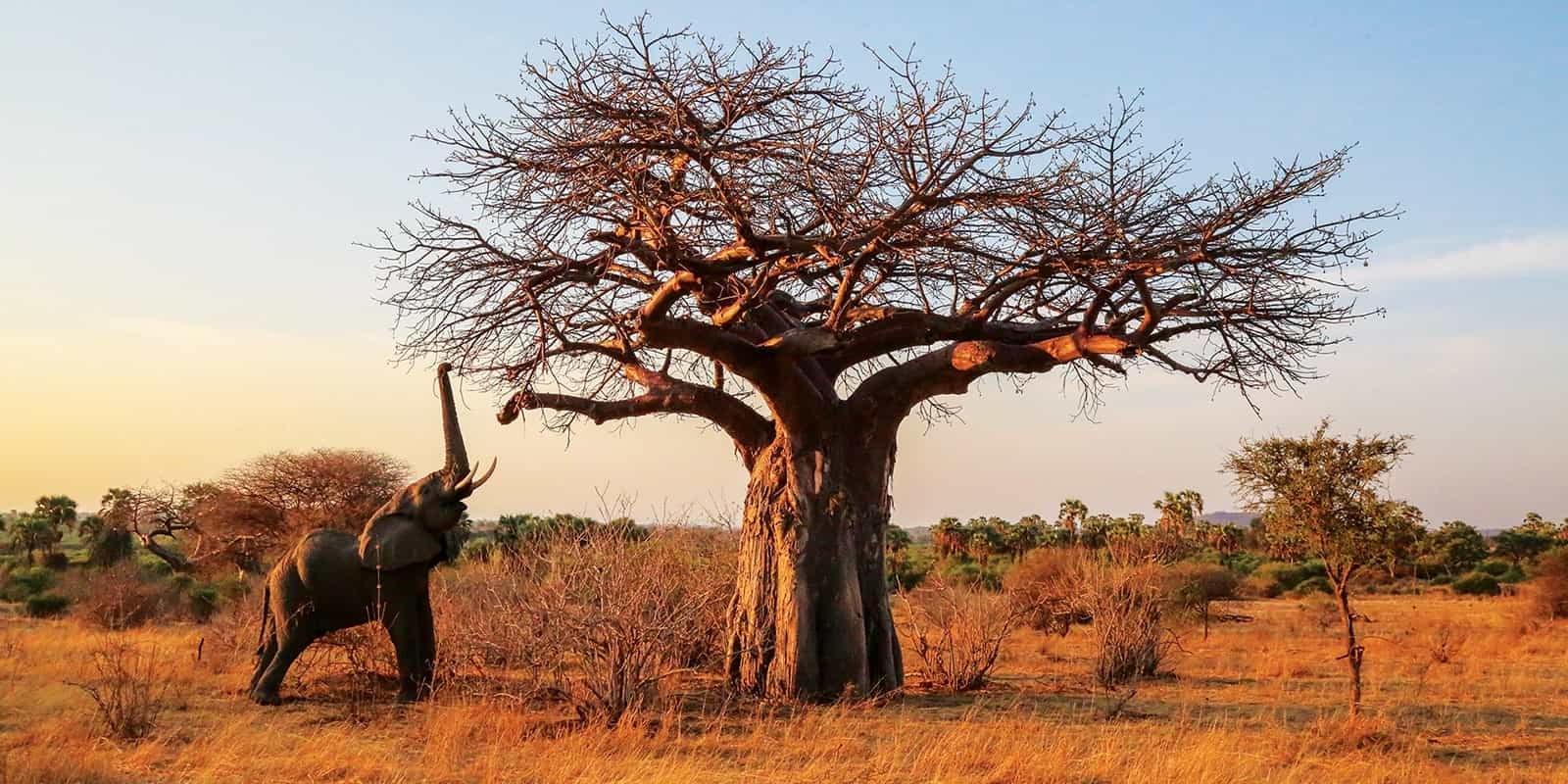
The park is associated with large elephant populations, baobab trees and the Tarangire River, which provides an important source of water during drier periods.
Wildlife concentrations can be especially impressive when animals move towards reliable water sources.
Tarangire is also a strong destination for birdwatching and landscape photography.
For travellers with limited time, it can be combined with Lake Manyara and Ngorongoro as part of a shorter northern Tanzania safari.
Nyerere National Park: Southern Tanzania's vast wilderness
Nyerere National Park offers a different kind of safari experience from the northern circuit.
The park forms part of the wider Selous ecosystem and is associated with extensive wilderness, rivers, wetlands and varied wildlife habitats.
The Rufiji River system is one of its defining features.
Where authorised and available, boat-based wildlife excursions can provide a contrasting perspective to conventional game drives.
Visitors may observe hippos, crocodiles, birds and other animals associated with river environments.
Nyerere is particularly attractive to travellers seeking a safari experience with a strong sense of space and a combination of terrestrial and river-based activities.
Ruaha: A destination for experienced safari travellers
Ruaha National Park is among Tanzania's most significant wilderness destinations.
Its landscapes combine baobab-studded plains, rocky hills, seasonal rivers and woodland habitats.
The park supports elephants, lions, leopards, wild dogs and a wide variety of antelope and bird species.
Ruaha is especially appealing to travellers who value remote environments and are prepared to spend several days exploring a large protected area.
Because accommodation and transport options can be more limited than in northern Tanzania, advance planning is important.
Western Tanzania: Chimpanzees and remote national parks
Tanzania's western tourism circuit provides another dimension to the country's wildlife offering.
Gombe National Park and Mahale Mountains National Park are internationally associated with chimpanzees and forest ecosystems near Lake Tanganyika.
Gombe is particularly significant because of the long-running chimpanzee research associated with Jane Goodall.
Mahale combines forested mountains with the remarkable landscape of Lake Tanganyika.
These destinations require more specialised transport and accommodation arrangements than many conventional safari parks.
For travellers seeking rare and immersive wildlife experiences, however, they provide an opportunity to discover a different side of Tanzania.
Why these rankings matter for East African tourism
The inclusion of three East African countries in the same global top ten has implications beyond national tourism promotion.
It demonstrates the region's collective appeal to international travellers interested in wildlife, biodiversity and nature-based experiences.
Kenya, Rwanda and Tanzania are often presented as competing safari destinations, but their tourism products can also complement one another.
A visitor interested in the Great Migration may travel between the Serengeti and Maasai Mara.
Another traveller may combine a Tanzania safari with mountain gorilla trekking in Rwanda.
A third may prefer a longer itinerary exploring Kenya's savannahs, Rwanda's forests and Tanzania's less-promoted national parks.
This creates opportunities for regional travel partnerships, multi-country itineraries and specialised experiences tailored to different visitor interests.
The recognition may also encourage travellers to explore destinations beyond the most famous national parks.
For Tanzania, this includes southern and western parks. For Kenya, it includes northern reserves and community conservancies. For Rwanda, it includes Nyungwe and Akagera alongside Volcanoes National Park.
Nevertheless, international rankings should be understood in context.
The Wanderlust awards reflect the preferences of participating readers. They do not measure wildlife abundance, biodiversity outcomes, park-management performance or conservation funding.
Their value lies primarily in demonstrating international travel interest and providing destinations with a platform for promotion.
Planning a wildlife holiday in Kenya, Rwanda and Tanzania
For travellers inspired by the awards, the most important question is not simply which country ranked highest, but which destination best matches their interests, available time and budget.
Which destination should you choose?
| Traveller interest | Recommended destination |
| Classic savannah safaris and big cats | Kenya or Tanzania |
| Great Migration experiences | Serengeti and Maasai Mara |
| Mountain gorilla trekking | Rwanda |
| Chimpanzee tracking | Rwanda or western Tanzania |
| Remote wilderness safaris | Southern and western Tanzania |
| Elephant photography | Amboseli, Tarangire or Ruaha |
| Forest hiking and primate experiences | Rwanda's Nyungwe |
| Safari combined with an Indian Ocean beach holiday | Tanzania and Zanzibar |
Best time to visit
The most suitable travel period depends on the destination and intended activity.
June to October is generally popular for safaris in Kenya and Tanzania because conditions are comparatively dry in many wildlife areas. This is also a period when migration activity may be observed in the northern Serengeti and Maasai Mara.
December to March can be attractive for Tanzania's southern Serengeti and Ndutu region, where wildebeest calving is commonly associated with the early months of the year.
June to September and December to February are often preferred for gorilla trekking in Rwanda, although rainforest weather remains unpredictable.
April and May are generally wetter across several parts of the region. Some destinations may offer fewer visitors and attractive accommodation rates, but road access and outdoor activities can be affected by rainfall.
Migration movements, wildlife sightings and weather conditions are natural processes and cannot be guaranteed.
A suggested 14-day East Africa wildlife itinerary
Days 1–2: Nairobi, Kenya. Arrive and explore the city, with time to recover from international travel.
Days 3–5: Maasai Mara. Enjoy guided game drives and wildlife photography in Kenya's celebrated savannah landscape.
Days 6–8: Serengeti, Tanzania. Continue to Tanzania through an appropriate cross-border route or flight arrangement, allowing realistic transfer time. Spend several days exploring the Serengeti.
Days 9–10: Ngorongoro and Arusha. Visit Ngorongoro Conservation Area before travelling to Arusha.
Days 11–12: Kigali, Rwanda. Fly to Kigali through an available regional connection and explore the capital.
Days 13–14: Volcanoes National Park. Travel to the Musanze region for a prebooked gorilla trek before departure, allowing sufficient time for onward travel.
This is a sample itinerary rather than a fixed package. Cross-border transport, flight schedules and gorilla permits should be confirmed before booking. Travellers seeking a more relaxed holiday should consider extending the journey to 16–18 days.
Entry requirements and travel planning
Kenya, Rwanda and Tanzania maintain separate immigration requirements.
Kenya generally requires eligible foreign visitors to obtain an Electronic Travel Authorisation before travel, subject to exemptions.
Rwanda provides visas on arrival for citizens of all countries, although fees and exemptions vary.
Tanzania offers electronic visa applications for eligible travellers, with requirements depending on nationality and visa category.
The East Africa Tourist Visa covers Kenya, Rwanda and Uganda under specified conditions but does not include Tanzania.
Travellers should also check passport validity, travel-health requirements, park fees and any applicable visitor insurance.
Official resources include Kenya eTA, Rwanda Immigration and Tanzania eVisa.
Conservation and the future of East African wildlife tourism
The international recognition of Kenya, Rwanda and Tanzania comes with an important responsibility.
Wildlife tourism depends on the continued protection of ecosystems, effective management of protected areas and meaningful relationships with communities living near wildlife habitats.
Tourism can generate employment, support conservation programmes and create incentives to maintain natural landscapes.
However, poorly managed tourism can also increase pressure on habitats, infrastructure and wildlife.
Travellers can contribute to more responsible tourism by choosing licensed operators, respecting park regulations, maintaining appropriate distances from animals and supporting businesses that demonstrate credible conservation and community commitments.
For the three East African countries recognised by Wanderlust, the challenge is to translate international popularity into long-term environmental and economic benefits.
East Africa's wildlife appeal extends beyond rankings
The 2026 Wanderlust Reader Travel Awards have placed Kenya, Rwanda and Tanzania among the world's ten most desirable nature and wildlife destinations, but the region's greatest strength is the diversity of experiences available across its borders.
Kenya offers some of Africa's most celebrated savannah safaris. Rwanda provides extraordinary encounters with mountain gorillas and protected forest ecosystems. Tanzania combines globally recognised wildlife destinations with extensive wilderness landscapes, chimpanzee habitats and opportunities to explore remote national parks.
For international travellers, these are not simply three countries competing for a place on a travel list.
They are three destinations that can form part of a much larger East African journey.
Whether the goal is photographing lions in the Maasai Mara, observing mountain gorillas in Rwanda or exploring the Serengeti and Ngorongoro, the region offers wildlife experiences that remain among the most compelling reasons to visit Africa.