Zanzibar: The Indian Ocean Island That Feels Different From the Rest
Zanzibar’s first advantage is variety. Many island destinations are beautiful but predictable. You fly in, check into a resort, spend several days by the beach, and leave with memories of the ocean. Zanzibar can offer that, but it can also offer more layered travel.
Zanzibar is not trying to be Mauritius. It is not trying to be Seychelles, Madagascar or Comoros either. Its strength is that it sits in its own category: an island where white-sand beaches, Swahili history, spice culture, marine life, luxury hospitality and mainland safari access meet in one destination.
That is what makes Zanzibar one of the most compelling islands in the Western Indian Ocean today.
Mauritius is polished, organised and mature. Seychelles is exclusive, quiet and high-end. Madagascar is vast, wild and ecological. Comoros is still largely undiscovered. Zanzibar, by contrast, feels alive. It has the beauty of an island escape, but also the texture of a real place: old stone alleys, spice markets, dhow sails, village life, coral reefs, beach clubs, private villas, boutique resorts and centuries of cultural exchange.
For travellers looking for more than a beach holiday, Zanzibar offers something rare. It gives you the Indian Ocean, but with a story.
Why Zanzibar is rising faster than the rest
Zanzibar’s growth is no longer just a feeling. The numbers now show that the island is becoming one of the fastest-scaling tourism destinations in the Western Indian Ocean. In 2025, Zanzibar received 917,167 international visitors, up from 736,755 in 2024. That is an increase of about 24.5% in one year. Mauritius still received more visitors, with 1,436,250 tourist arrivals in 2025, but its growth was much slower at 3.9%. Seychelles welcomed 398,841 visitors in 2025, while Madagascar recorded about 315,000 visitors in 2024 and Comoros remained much smaller, with about 69,831 air arrivals in 2023/24.
This means Zanzibar has already moved ahead of Seychelles, Madagascar and Comoros by visitor volume, while continuing to narrow the gap with Mauritius.
The airport story supports the same direction. Zanzibar’s passenger traffic rose from 840,599 in 2020 to 2.4 million in 2024, with projections expected to exceed 2.8 million in 2025. The number of airlines operating in Zanzibar increased from 68 in 2020 to 78 in 2024, with 38 expected to offer direct flights in 2025. For travellers, this matters because island holidays depend heavily on access. The easier it is to fly in, the easier it becomes to plan a honeymoon, family escape, luxury retreat, safari extension or last-minute beach holiday.
Zanzibar is becoming easier to reach, easier to package and easier to combine with mainland Tanzania.
What makes Zanzibar unique
Zanzibar’s first advantage is variety.
Many island destinations are beautiful but predictable. You fly in, check into a resort, spend several days by the beach, and leave with memories of the ocean. Zanzibar can offer that, but it can also offer more layered travel.
You can wake up in a private beachfront villa in Nungwi, Kendwa, Matemwe, Paje, Bwejuu or Michamvi. You can spend the morning sailing in a traditional dhow, the afternoon walking through Stone Town, and the evening dining beside the ocean. You can visit spice farms, swim with dolphins responsibly, explore coral reefs, take a sandbank picnic, enjoy sunset sailing, visit Jozani Forest, or simply disappear into a slow island rhythm.
The island is compact enough to experience within a week, but rich enough to feel different every day.
That is the major difference between Zanzibar and many of its competitors. Mauritius is excellent for resort comfort and structured leisure. Seychelles is ideal for high-end seclusion. Madagascar is extraordinary for adventure and biodiversity, but requires more time and logistics. Comoros is beautiful, but still developing its tourism infrastructure. Zanzibar sits in the middle: accessible, atmospheric, culturally rich, and increasingly sophisticated.
Zanzibar compared to Mauritius
Mauritius remains the most mature tourism economy among the Indian Ocean islands. It has strong resorts, golf estates, branded hospitality, luxury villas, stable infrastructure and a long history of destination marketing.
Zanzibar is different.
It is less manicured, but more atmospheric. It feels more cultural, more coastal, more historical and more connected to Africa’s mainland tourism circuit. A traveller can combine Serengeti, Ngorongoro, Tarangire or Kilimanjaro with Zanzibar in a single itinerary. That gives Zanzibar an advantage Mauritius cannot easily replicate.
For travellers who want comfort, Mauritius performs very well. For travellers who want safari, spice culture, Swahili heritage and Indian Ocean relaxation in one journey, Zanzibar is the stronger choice.
Zanzibar compared to Seychelles
Seychelles is one of the world’s most beautiful island destinations. Its strength is exclusivity: granite islands, clear waters, protected beaches, conservation, luxury lodges and privacy.
Zanzibar’s advantage is energy.
It has more movement, more cultural interaction, more nightlife in selected areas, more local food experiences, more historical depth and wider options for different traveller budgets. Seychelles is often about escaping from the world. Zanzibar is about entering another world.
For honeymooners who want total privacy, Seychelles is powerful. For honeymooners who want romance with culture, food, spice farms, sailing, Stone Town and a safari extension, Zanzibar offers a richer journey.
Zanzibar compared to Madagascar
Madagascar is one of the most biodiverse places on earth. It is ideal for travellers who want lemurs, baobabs, rainforests, remote beaches and serious nature exploration.
But Madagascar is logistically more demanding.
Distances are large, internal travel can be slow, and the best experiences often require more time. Zanzibar is easier. It is smaller, more accessible and better suited for travellers who want a complete island experience without complicated movement.
For adventure travellers, Madagascar is unmatched. For travellers who want beauty, culture, beaches, marine experiences and ease, Zanzibar is more practical.
Zanzibar compared to Comoros
Comoros is still one of the least commercialised island destinations in the region. That makes it appealing for travellers who want something raw, quiet and largely untouched.
Zanzibar, however, is far more developed as a tourism destination. It has better air access, more accommodation options, stronger tour infrastructure, more restaurants, more activities and a more established hospitality economy.
Comoros may appeal to explorers. Zanzibar works for honeymooners, families, luxury travellers, solo travellers, groups, wellness travellers and safari guests.
The island for culture, coast and calm
The real beauty of Zanzibar is that it allows travellers to choose their own pace.
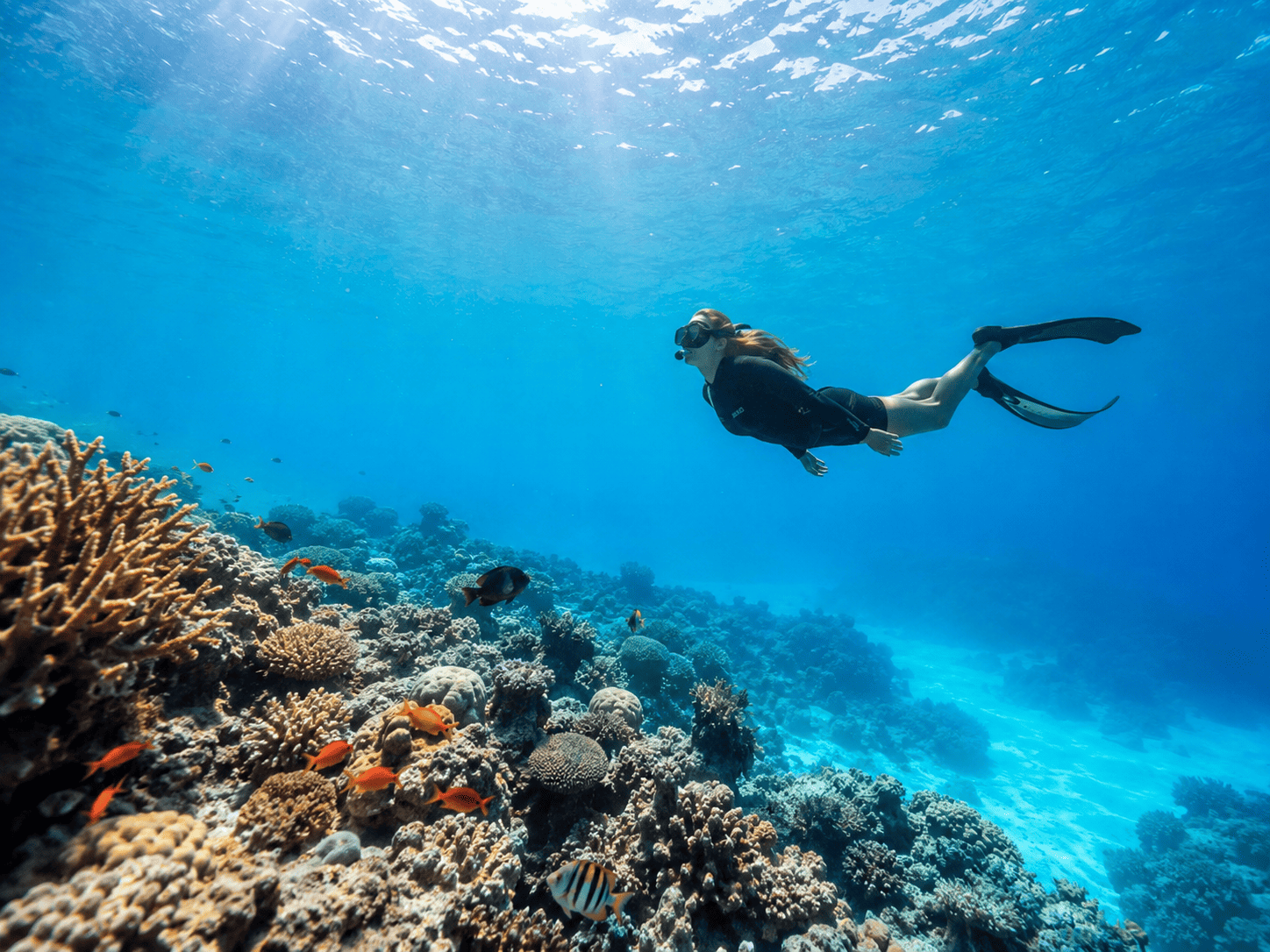
For some, Zanzibar is about stillness: long mornings, warm ocean, private pools, barefoot walks and candlelit dinners. For others, it is about movement: diving, kitesurfing, snorkelling, spice tours, local food, Stone Town walks, village visits and sunset cruises.
The north coast offers lively beaches, clear water and sunset energy. Nungwi and Kendwa are ideal for travellers who want beach comfort, restaurants, nightlife and a more social atmosphere.
The east coast is more relaxed and wind-shaped. Paje, Jambiani, Bwejuu and Michamvi are suited for kitesurfing, boutique stays, long beaches and slower travel.
Matemwe and the northeast are excellent for travellers who want quiet coastal luxury, Mnemba Atoll access and a more private atmosphere.
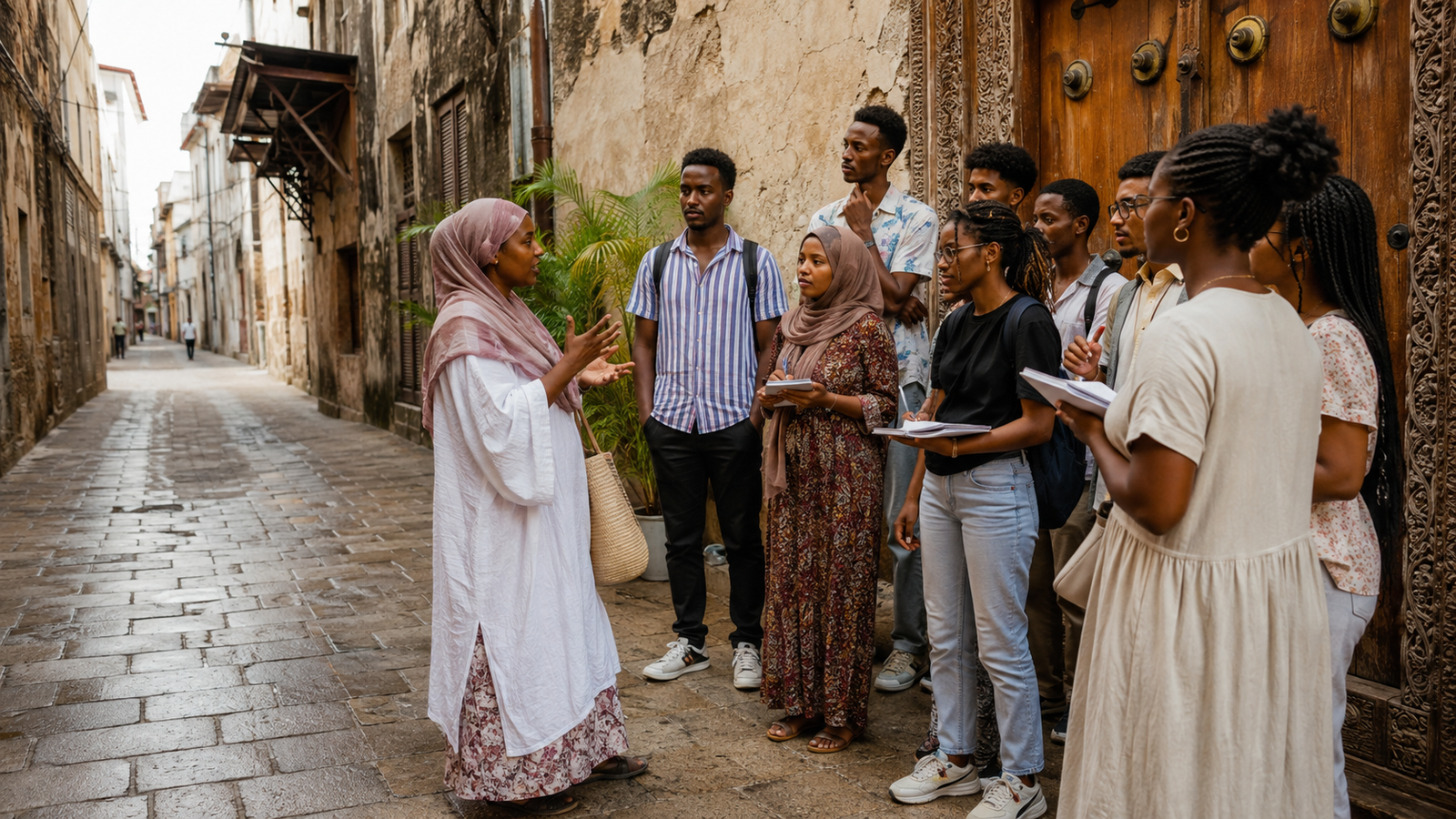
Stone Town remains the cultural heart. It is not just a stopover. It is where Zanzibar’s identity becomes visible: carved doors, narrow alleys, old merchant houses, rooftop restaurants, museums, markets, mosques, churches and the memory of centuries of trade across Africa, Arabia, India and Europe.
Why Zanzibar works so well after safari
For Zamia Africa travellers, Zanzibar is one of the best ways to complete a Tanzania journey.
After early morning game drives, dusty roads, crater views and the intensity of the Serengeti, Zanzibar changes the rhythm. It gives the body rest and the journey emotional balance. The safari gives you scale. Zanzibar gives you softness.
This is why the safari-and-Zanzibar combination remains one of East Africa’s strongest travel products.
A guest can begin with wildlife in Tarangire, Ngorongoro or Serengeti, then fly directly to Zanzibar for four to six nights of beach, culture and ocean experiences. Instead of ending the trip abruptly after safari, Zanzibar allows the journey to settle.
For honeymooners, it creates contrast. For families, it gives children space to relax after long drives. For luxury travellers, it allows a seamless transition from lodge to villa. For wellness travellers, it offers the final reset.
Suggested Zamia Africa experience
A strong Zanzibar itinerary should not be rushed. The island deserves time.
A five-night stay works well for travellers adding Zanzibar after safari. A seven-night stay is better for those who want both culture and coast. A ten-night stay allows a deeper experience with Stone Town, spice farms, beach relaxation, sailing, marine activities and quiet days.
A balanced Zamia Africa itinerary could look like this:
Day one begins with arrival in Zanzibar and transfer to a beachfront hotel or private villa.
Day two can be left for pure rest, allowing guests to slow down, swim, walk the beach and recover from travel or safari.
Day three can focus on Stone Town, with a guided heritage walk, local lunch, spice-market visit and sunset rooftop dinner.
Day four can be built around the ocean: dhow sailing, snorkelling, sandbank picnic or a private marine excursion.
Day five can include a spice farm, Jozani Forest or a village experience, depending on the guest’s interests.
Day six can be kept open for wellness, spa treatments, beach time or private dining.
Day seven is ideal for a relaxed departure, with no rushed morning unless flight timing requires it.
The best Zanzibar trips leave space. The island is not meant to be consumed like a checklist. It is meant to be absorbed.
Best for different travellers
Zanzibar is excellent for honeymooners who want romance without isolation, especially when combined with Serengeti or Ngorongoro. It works well for families because it offers calm beaches, manageable distances and a good mix of activities.
It is strong for luxury travellers because the island now has a growing range of boutique resorts, private villas, branded hotels and curated experiences. It is ideal for culture travellers because Stone Town, spice heritage and Swahili coastal life make it more than a beach destination. It is attractive for wellness travellers because the island naturally supports slower movement, ocean therapy, spa rituals, private dining and quiet coastal stays.
It also works for groups and destination celebrations, especially when guests want a destination that feels exotic but still accessible.
When to visit Zanzibar
Zanzibar can be visited throughout the year, but the most comfortable periods are generally June to October and December to February.
June to October is dry, breezy and ideal for beach stays after safari. December to February is warmer, festive and strong for honeymoons, family holidays and luxury escapes.
The long rains usually fall around April and May, while November can bring short rains. These periods may still work for travellers seeking better value and fewer crowds, but weather flexibility is important.
The investment boom behind the travel experience
Zanzibar’s tourism growth is also supported by strong investment momentum.
ZIPA reports more than USD 14.29 billion in approved investment capital across 1,351 projects, with tourism accounting for more than 62% of approved investment projects. This does not mean all the approved investment has already been built, but it shows the direction of the island’s development pipeline.
The visible result is a broader hospitality landscape: more resorts, serviced apartments, lifestyle developments, branded hotels, private villas and mixed-use coastal projects. For travellers, this means more choice. For the destination, it means Zanzibar is moving from a simple beach economy into a tourism, lifestyle and real estate platform.
That growth must be managed carefully. Zanzibar’s appeal depends on its beaches, heritage, local communities and marine environment. If development moves faster than infrastructure, the island could face pressure on water, waste, roads, energy, affordability and cultural preservation.
The best version of Zanzibar’s future is not uncontrolled growth. It is thoughtful growth: better hotels, better experiences, better conservation, better local participation and better infrastructure.
Why travel with Zamia Africa
Zanzibar is easy to visit, but it is better when curated properly. The island has many faces, and not every beach suits every traveller. Some areas are lively, others are quiet. Some are better for swimming, others for kitesurfing. Some hotels are ideal for honeymooners, while others are better for families or groups. Stone Town can feel confusing without a good guide. Ocean excursions vary greatly in quality, privacy and sustainability.
Zamia Africa designs Zanzibar journeys around the guest, not around a fixed package.
That means choosing the right coast, the right pace, the right hotel, the right experiences and the right balance between rest and discovery. It also means connecting Zanzibar smoothly with mainland Tanzania, whether the journey begins in Arusha, Serengeti, Ngorongoro, Kilimanjaro or Dar es Salaam.
Zanzibar’s uniqueness is not only in what it has. It is in how it makes a journey feel.
It gives travellers the ocean, but also history. It gives them luxury, but also culture. It gives them privacy, but also life beyond the resort. It gives them the Indian Ocean, but with an unmistakably East African soul.
That is why Zanzibar is not just another island holiday.
It is Tanzania’s island story — and one of the most distinctive travel experiences in the Western Indian Ocean.