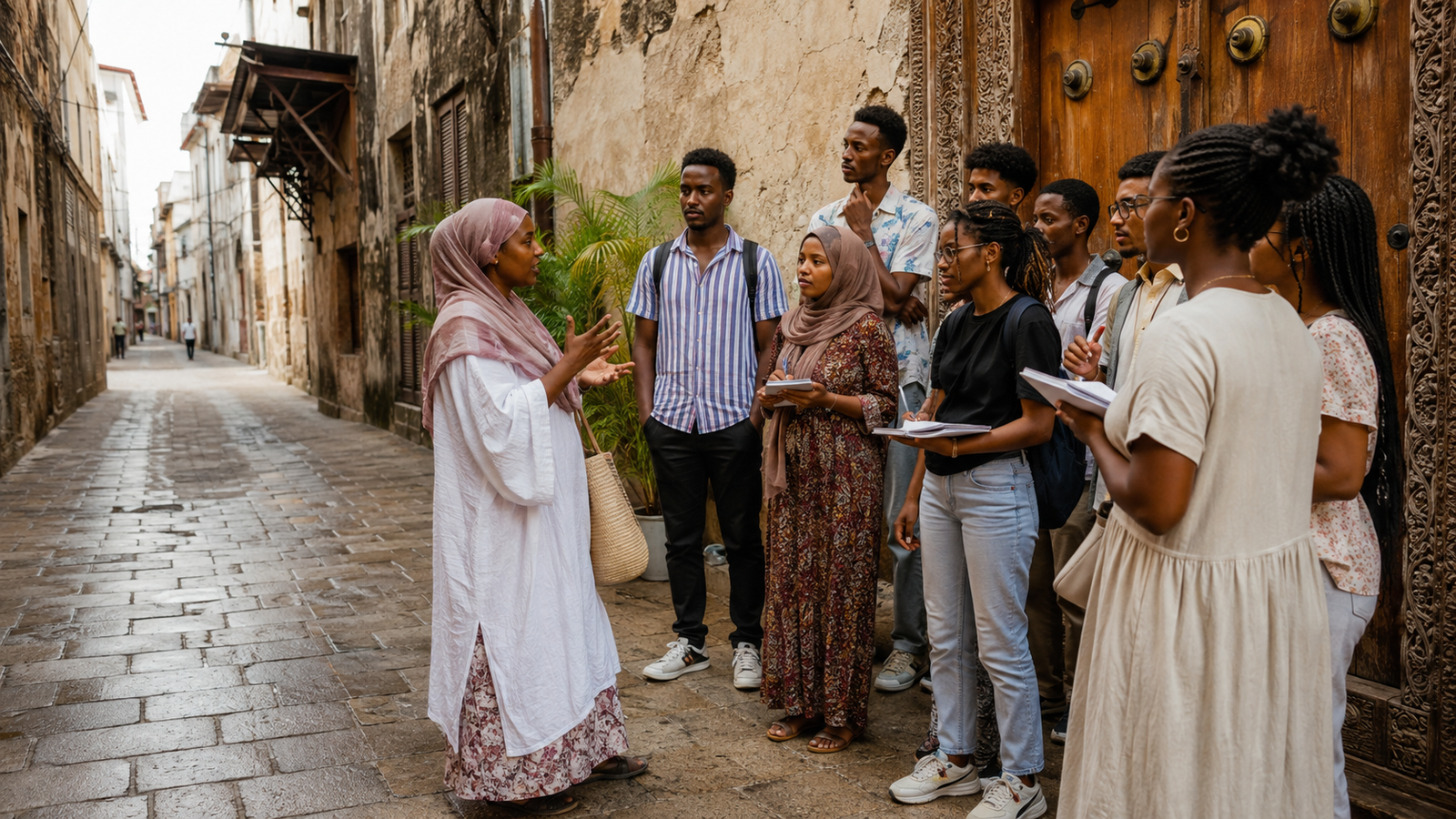
Is an East Africa Student Heritage Tour Worth It? An Honest Guide
East Africa can connect Swahili trade, archaeology, colonial history, independence, ecology, living culture and contemporary enterprise.
A student heritage tour is worth it when travel is treated as structured learning, not sightseeing with school branding. East Africa can connect Swahili trade, archaeology, colonial history, independence, ecology, living culture and contemporary enterprise. The educational value depends on preparation, local voices and reflection.
What students can learn
Stone Town demonstrates how African, Arab, Indian and European influences shaped a Swahili trading city. Bagamoyo, Kilwa, museums, memorials and community institutions can support discussions about trade, faith, slavery, empire, resistance and nation-building. Natural heritage sites connect conservation with livelihoods and climate.
What a strong itinerary looks like
Begin with clear learning questions. Use fewer sites with deeper facilitation. Alternate guided visits, primary-source interpretation, conversations, field notes and student presentations. Include contemporary voices so heritage is not presented as a closed past. Provide age-appropriate context before emotionally difficult sites.
Safeguarding and operations
The operator should document supervision ratios, accommodation security, transport standards, medical information, emergency communication, consent for images and procedures for separated students. Dietary, disability, religious and mental-health needs require early discussion. International schools should align travel with their own safeguarding policies.
Cost versus value
Compare what is included: educators or specialist guides, entry fees, meals, transport, insurance support, learning materials and teacher places. The cheapest itinerary may rely on rushed visits and weak interpretation. Ask how local institutions and speakers are compensated.
The decision test
Book if the program has measurable learning goals, responsible partners and realistic pacing. Do not book a generic circuit relabeled as education. Zamia’s Roots & Routes direction can be adapted for schools, universities, diaspora groups and faith institutions.
Frequently Asked Questions
What age is appropriate?
Programs can be adapted for different ages, but content, safeguarding and physical demands must match the group.
How long should a student heritage tour be?
Seven to ten days can support depth without excessive movement; shorter programs should focus on one region.
Should students prepare before travel?
Yes. Pre-reading, vocabulary, historical timelines and ethical photography guidance improve learning.
Can safari be included?
Yes, if linked to conservation, land use and community learning rather than added as an unrelated reward.
How is educational impact measured?
Use journals, facilitated reflection, presentations, projects or assessments connected to stated learning outcomes.
Plan with Zamia Africa
A strong East African journey begins with honest advice and an itinerary shaped around your timing, interests and pace. Explore Zamia Africa’s journeys or request a tailored plan at https://zamiaafrica.com/experiences.