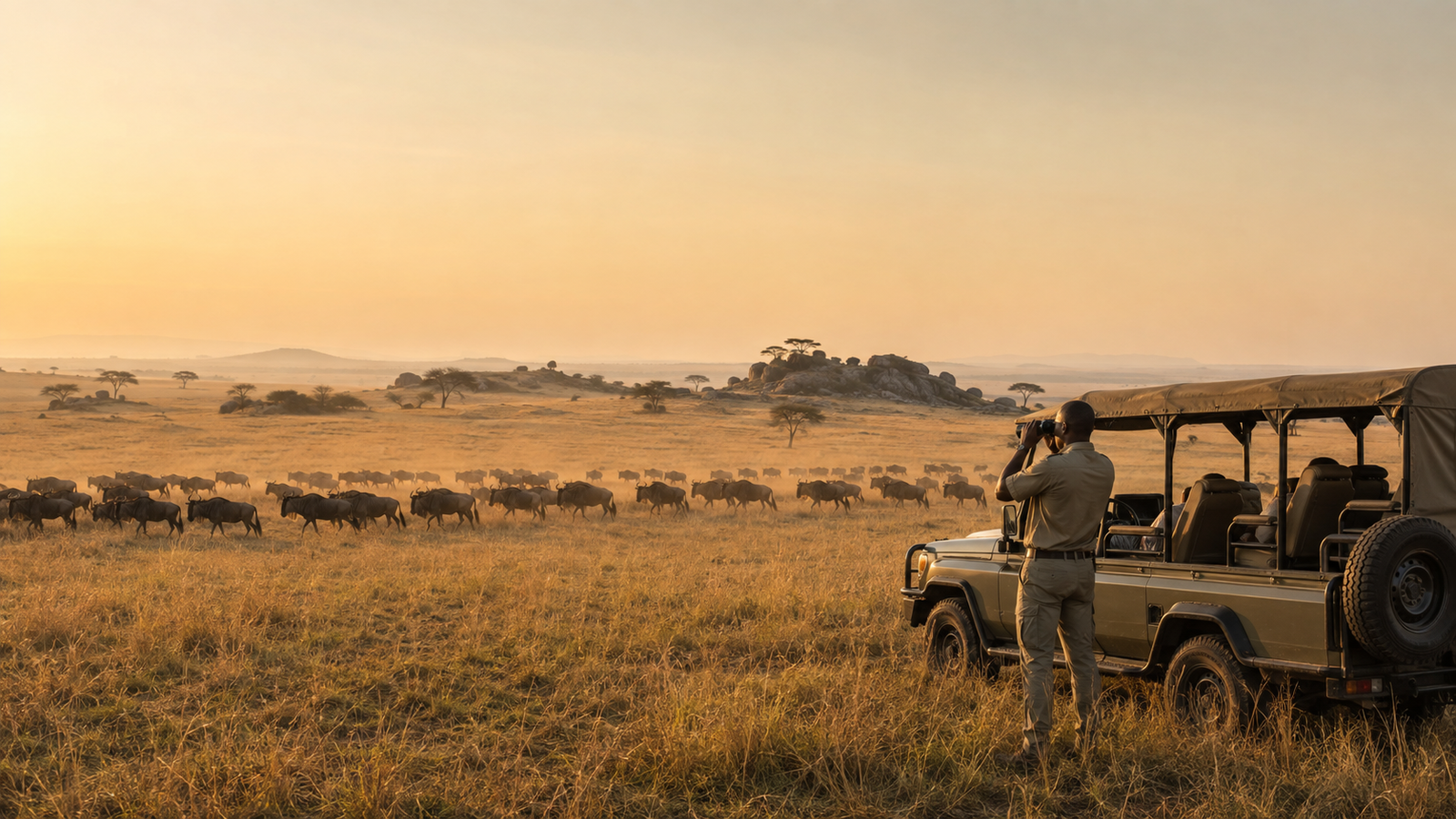
The Best Serengeti Safari Itinerary: What to Reserve and When
A successful Serengeti safari is not built by adding more game drives. It is built by placing you in the right part of a vast ecosystem at the right time, then protecting enough time for wildlife to set the pace.
A successful Serengeti safari is not built by adding more game drives. It is built by placing you in the right part of a vast ecosystem at the right time, then protecting enough time for wildlife to set the pace. For most first-time travelers, seven days in northern Tanzania, with three or four nights connected to the Serengeti, creates the best balance of variety, depth and comfort.
What should you book?
Reserve international flights first, then your safari vehicle and guide, strategically located Serengeti accommodation, domestic bush flights where needed, and limited-capacity experiences such as balloon safaris. Do not choose a camp from photographs alone. Its location in relation to seasonal wildlife movement can change the quality of every day. A private 4x4 also gives couples, families and photographers control over departure times, sightings and rest stops.
A reliable seven-day northern circuit
Day 1 works best as an arrival and recovery night in Arusha. Day 2 introduces Tarangire’s elephants and baobab country. Day 3 can include Lake Manyara or a direct transfer through the Ngorongoro highlands into central Serengeti. Days 4 and 5 should be full Serengeti days, not rushed transit days. On Day 6, travel toward Ngorongoro with a final game drive. Descend into the crater on Day 7 before returning to Arusha or Kilimanjaro International Airport. Travelers focused on migration crossings should add northern Serengeti nights rather than trying to reach the Mara River from central Serengeti on a day trip.
Match the route to the season
From roughly January to March, the southern plains and Ndutu area are associated with calving and predator activity. From June into October, drier conditions concentrate wildlife and the migration may move through western and northern sectors, although nature does not follow a guaranteed timetable. Central Serengeti remains valuable year-round because resident wildlife does not migrate away. November and early December can reward flexible travelers with changing skies, fewer vehicles and attractive value.
When to reserve
For July–October, festive weeks and the January–February calving period, begin planning 9–12 months ahead if you want specific camps. A six-month lead can still work with flexible dates. At 90 days, reconfirm names, passport details, dietary needs, medical considerations and domestic flight baggage rules. Balloon safaris and small high-demand camps should not be left until arrival. Always ask what is included: park fees, concession or camping fees, transfers, meals, drinks, laundry, gratuities and evacuation cover can materially change the real cost.
Common itinerary mistakes
The costliest mistakes are changing lodges every night, treating driving distance as if it were highway travel, spending only one night in the Serengeti, and selecting a camp far from the season’s priority area. Build breathing room for weather, wildlife and fatigue. A safari should feel expansive, not like an airport connection. Zamia Africa can tailor the classic Serengeti–Ngorongoro route to migration timing, family pace, photography or a Zanzibar extension.
Frequently Asked Questions
How many days do I need in the Serengeti?
Three full safari days is a strong minimum for first-time visitors. Four or five nights allow different habitats, slower pacing and better resilience to changing wildlife conditions.
Is the Great Migration guaranteed?
No. It is a continuous natural movement influenced by rain, grass and water. Good planning improves probability but no ethical operator should guarantee a crossing or exact herd location.
Should I fly or drive into the Serengeti?
Driving adds landscape and cultural context; flying saves time and reduces long transfers. Many travelers combine both—drive in through the northern circuit and fly out.
Is a private safari worth it?
It is especially valuable for families, photographers, honeymooners and travelers who want control over timing, comfort and the length of each sighting.
When should I book a balloon safari?
Reserve alongside your main safari, particularly in peak periods. Flights are limited and weather-dependent.
Plan with Zamia Africa
A strong East African journey begins with honest advice and an itinerary shaped around your timing, interests and pace. Explore Zamia Africa’s journeys or request a tailored plan at https://zamiaafrica.com/experiences.
References
- Tanzania National Parks – Serengeti National Park: https://www.tanzaniaparks.go.tz/nationalparks/Serengeti
- TANAPA – Plan a Trip: https://www.tanzaniaparks.go.tz/plan-a-trip
- Zamia Africa – Tanzania journeys: https://zamiaafrica.com/destinations/tanzania