Planning a Tanzania Safari in November? What Travellers Should Know About Heavy Rains
November can be a beautiful time to explore Tanzania. The savannah begins to turn green, national parks may feel quieter, and coastal holidays still offer moments of sunshine between showers. But travellers planning journeys this month should pay particular attention to weather and road conditions.
November can be a beautiful time to explore Tanzania. The savannah begins to turn green, national parks may feel quieter, and coastal holidays still offer moments of sunshine between showers. But travellers planning journeys this month should pay particular attention to weather and road conditions.
What has happened?
The Tanzania Meteorological Authority's forecast for 1–10 November, reported on 3 November, indicates periods of rain and thunderstorms in parts of the Lake Victoria Basin, western Tanzania, the northern highlands and coastal areas. Forecast conditions vary significantly between destinations and individual days.
Does this affect Serengeti safaris?
A weather warning is not a notice of park closure. It does not mean Serengeti National Park, Gombe, or Mahale has stopped receiving visitors. However, heavy rain can make some unpaved roads slower to use and can complicate transfers to remote lodges, airstrips and boat departures.
For a Serengeti safari, choose a route based on your lodge's location rather than assuming that all access roads experience the same conditions. Travellers heading towards Musoma, Bunda or western Serengeti should obtain especially recent road information. For Kigoma and Lake Tanganyika, check lake conditions and boat operators before committing to tight connections.
How to prepare for your holiday
Consider adding reasonable time between international arrivals, domestic flights and park transfers. Pack lightweight waterproof clothing, footwear suitable for muddy conditions and protective covers for cameras and electronics. If a road journey becomes unsuitable, an available fly-in alternative may be worth evaluating, but flights can also be affected by weather.
The rainy season can deliver rewarding wildlife photography, dramatic clouds and spectacular green scenery. What matters is choosing an itinerary that remains flexible when conditions change.
Why the green season can still be an excellent safari choice
Rain does not fall uniformly across Tanzania, and the word rainy season can obscure the differences between the northern highlands, the western lake basin, the Serengeti plains and the coast. A shower in Arusha does not mean that a lodge in the central Serengeti has the same conditions that afternoon. Travellers should therefore plan by location and route, not by a nationwide weather headline. Conditions can also change rapidly: a road that was passable yesterday may require extra time after a heavy overnight storm.
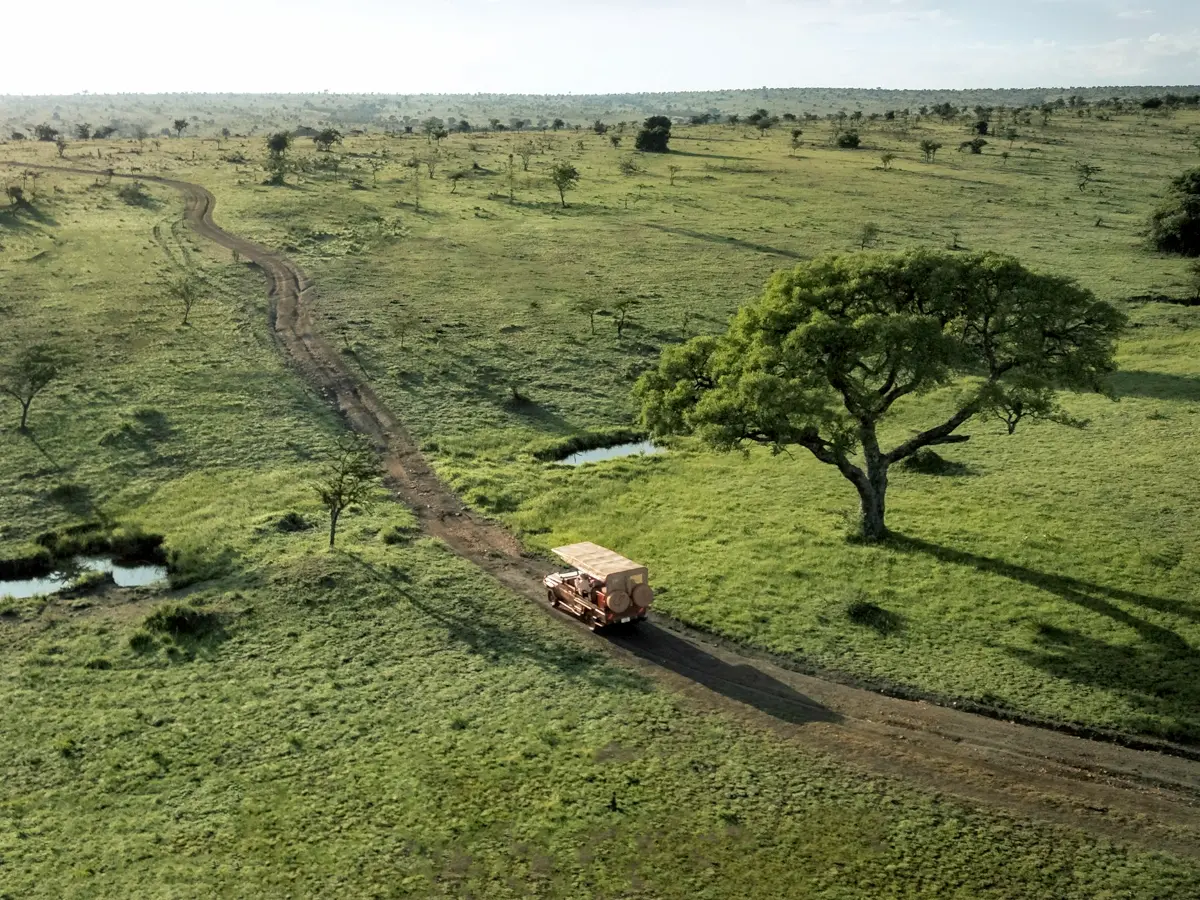
November brings a visual transformation to many safari landscapes. Fresh grass, dramatic cloud formations and changing light can be particularly attractive to photographers. Wildlife remains wild, however, and no operator can promise particular sightings or migration movements. If the Great Migration is your principal reason for visiting, ask about the expected location of the herds and the realities of reaching that area in your chosen week.
Building a flexible northern-circuit itinerary
For a seven- or eight-day holiday, a practical approach is to avoid changing lodges every night. Allow a comfortable arrival night around Arusha, choose a sensible combination of Tarangire, the Ngorongoro area and the Serengeti, and leave a margin around the final flight. The appropriate order depends on park conditions, lodge availability and whether the international departure is from Kilimanjaro, Dar es Salaam or Zanzibar.
A private vehicle is useful because it allows a guide to adjust departure times and game-drive routes when conditions change. That flexibility is not a substitute for safety: local park guidance, road closures and the judgement of an experienced driver should take precedence over a tightly packed itinerary. Where fly-in services are available, compare their weather sensitivity and luggage allowances as carefully as their apparent time savings.
Special considerations for western Tanzania and the islands
Western Tanzania deserves separate planning. A journey involving Kigoma, Gombe, Mahale or Lake Tanganyika can depend on boat transfers as well as roads and domestic flights. Lake conditions matter, and a cancelled or delayed transfer can affect the next several stages of a trip. Travellers should confirm who makes the decision to sail, what alternatives exist and how accommodation arrangements are handled if the weather intervenes.
For Zanzibar, a November beach holiday is not automatically a poor idea. Guests can plan a mixture of beach time, Stone Town visits, cooking experiences and other activities that can be rearranged around showers. Water-based excursions should proceed only when marine conditions and qualified operators make them appropriate. The most valuable preparation is an itinerary that has room to adapt, paired with insurance suited to the activities actually booked.
What to ask before confirming your booking
Ask for a day-by-day route, realistic transfer times, cancellation and amendment rules, and a contact person who can respond if conditions change. Request clear information about what the package includes: park fees, meals, domestic flights, transfers, luggage allowances and any activity-specific charges. A well-planned holiday can still feel relaxed and rewarding even when the weather does not follow a perfect forecast.
At Zamia Africa, we design private Tanzania safaris and Zanzibar holidays around the season, your preferred experiences and practical travel arrangements. Explore options with us.