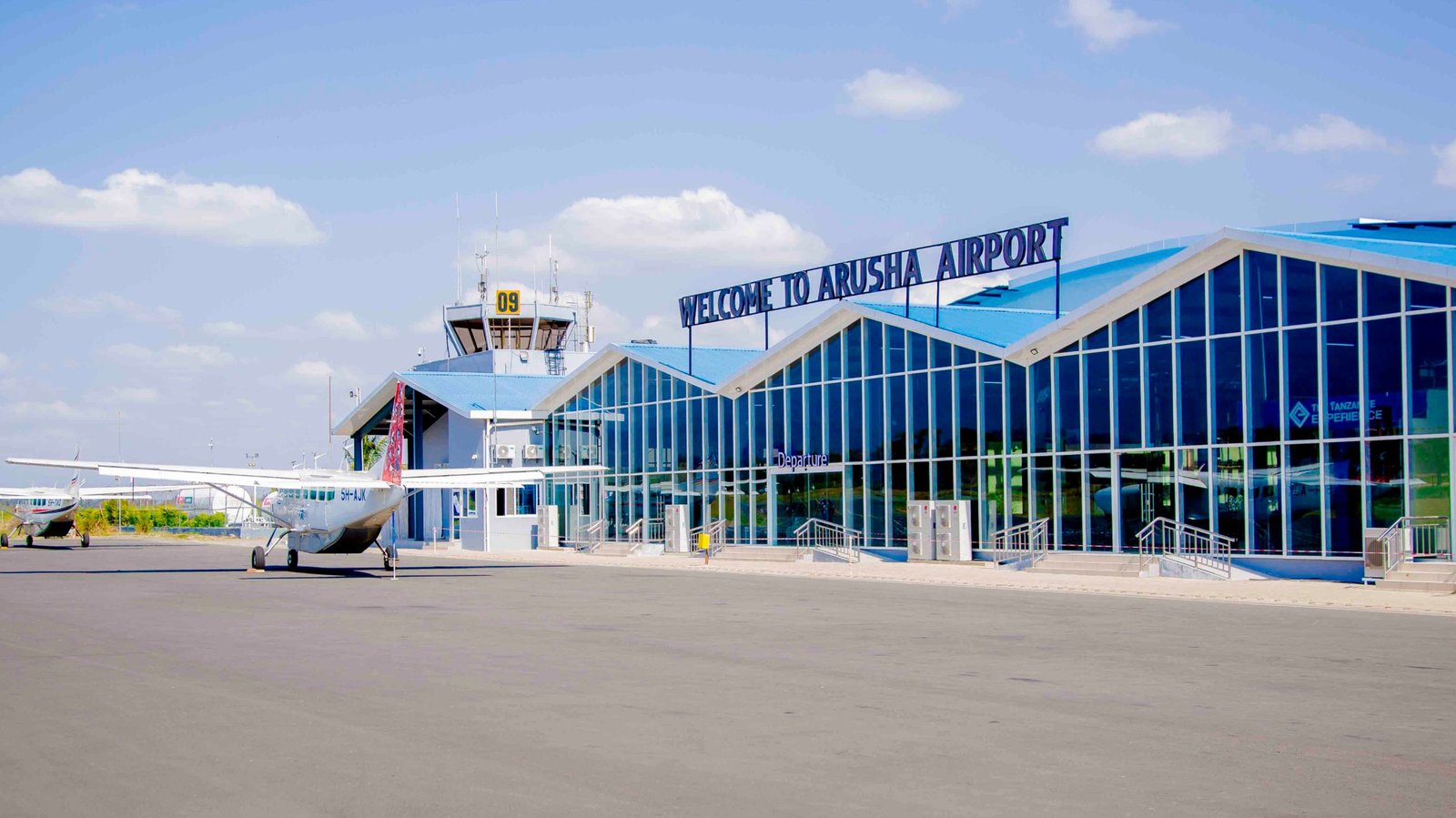
Arusha Airport Moves to 24-Hour Operations: What It Means for Tanzania's Northern Safari Circuit
Extended airport operations could create greater flexibility for domestic aviation, safari connections and travellers visiting Serengeti, Ngorongoro and other northern Tanzania destinations.
Arusha Airport has expanded its operating capability to support flights around the clock following improvements to runway lighting and associated aviation infrastructure.
The development, reported in early November 2026, is an important step for northern Tanzania's tourism transport network.
Arusha is the principal starting point for many of the country's most popular safari itineraries, connecting visitors to Tarangire National Park, Lake Manyara, Ngorongoro Conservation Area and Serengeti National Park.
The airport's expanded operating hours may allow airlines to introduce more flexible schedules and provide additional options for domestic travel.
However, the availability of 24-hour airport operations does not automatically mean that all commercial airlines have introduced night flights or that every destination can be reached at any time.
Flight schedules, aircraft capabilities, destination-airstrip restrictions and operating approvals remain important considerations.
Why Arusha matters to Tanzania's tourism industry
Arusha occupies a strategic position in northern Tanzania.
The city lies near Mount Meru and serves as a gateway to some of Africa's best-known protected landscapes.
It hosts tourism companies, safari guides, accommodation providers, transport businesses and other services supporting the country's northern circuit.
Many international visitors begin their journeys in Arusha after arriving through Kilimanjaro International Airport.
Others reach the city through domestic connections from Dar es Salaam, Zanzibar or other Tanzanian destinations.
Arusha Airport primarily supports domestic and regional aviation, including flights operated by smaller aircraft serving safari destinations.
Its role differs from that of Kilimanjaro International Airport, which handles a broader range of international passenger services.
Understanding this distinction is important when planning a safari.
What has changed at Arusha Airport?
The reported improvements include the installation and inspection of runway lighting intended to support operations beyond the airport's previous daytime window.
Runway lighting is essential for aircraft operating in low-light conditions.
It helps pilots identify the runway environment during approach, landing, taxiing and departure.
However, lighting is only one component of safe aviation operations.
Airports must also maintain appropriate air traffic services, emergency response arrangements, navigation procedures, staffing and regulatory approvals.
The expansion of operating hours therefore represents an infrastructure and operational development rather than a guarantee of additional commercial flights.
Airlines must still determine whether new services are commercially viable and operationally suitable.
How the change could benefit safari travellers
For travellers, one potential benefit is greater flexibility when connecting between destinations.
A visitor arriving in Tanzania later in the day may eventually have more options for reaching Arusha without waiting until the following morning.
Domestic airlines may also gain additional scheduling flexibility, particularly when aircraft are required to operate several routes during the day.
Tour operators could benefit from improved coordination between accommodation, airport transfers and safari departures.
However, these advantages depend on the actual schedules introduced by airlines.
Travellers should continue to plan around confirmed flights rather than assuming that airport availability guarantees a convenient connection.
Access to the Serengeti
The Serengeti is among the destinations that could benefit indirectly from improved aviation connectivity through Arusha.
Domestic flights provide an alternative to long overland journeys, allowing visitors to spend more time exploring the national park.
Several airstrips serve different parts of the Serengeti ecosystem.
The most appropriate arrival point depends on the location of the accommodation and the season.
For example, travellers interested in the northern Serengeti may need a different airstrip from those staying in the central or southern areas.
A flight to the wrong airstrip can create lengthy road transfers even when the aerial journey is relatively short.
Importantly, many safari airstrips operate under daylight and other restrictions.
Arusha Airport's extended hours do not automatically permit night operations at those destinations.
Ngorongoro and the northern safari circuit
Ngorongoro Conservation Area is generally reached by road from Arusha or neighbouring tourism destinations.
Visitors typically travel through the highlands towards Karatu and the crater rim.
For many itineraries, a road journey remains the most practical option because it allows travellers to combine Ngorongoro with Tarangire, Lake Manyara and the Serengeti.
Improved domestic air services to Arusha could make it easier to begin or conclude such journeys.
However, Ngorongoro itself is not transformed into a direct scheduled-flight destination simply because Arusha Airport operates for longer hours.
Travellers should assess the complete journey, including road transfers, park entry arrangements and accommodation check-in times.
Safari and beach holidays: Arusha and Zanzibar
One of Tanzania's most attractive tourism products is the combination of a wildlife safari and an Indian Ocean beach holiday.
Visitors may spend several days exploring the northern parks before flying to Zanzibar for relaxation.
The reverse arrangement is also popular.
A traveller arriving in Zanzibar can continue to Arusha for a safari, then return to the islands or depart through another international gateway.
More flexible domestic aviation could improve these combinations, particularly for travellers with limited time.
Nevertheless, itineraries should include realistic connection margins.
Domestic flight schedules can change, and weather or operational conditions may affect departures.
For travellers connecting to international flights, adequate contingency time is essential.
What about Kilimanjaro International Airport?
Arusha Airport and Kilimanjaro International Airport serve complementary roles.
Kilimanjaro International Airport is an important international gateway for northern Tanzania, including visitors arriving from overseas.
Arusha Airport is particularly useful for domestic connections and safari aviation.
The two airports are not interchangeable.
They are located at different distances from accommodation and safari departure points, and airlines do not necessarily serve both.
Travellers should check airport codes carefully when booking.
Arusha Airport uses ARK, while Kilimanjaro International Airport uses JRO.
Confusing the two can create unnecessary transport costs and missed connections.
The role of domestic aviation in Tanzania
Tanzania's geography makes aviation important to tourism.
Major attractions are distributed across a large country, and overland journeys between some destinations can take many hours or several days.
Domestic flights can make it possible to combine northern Tanzania, Zanzibar, southern national parks and western wildlife destinations within a limited holiday period.
Aviation also supports tourism businesses in remote areas where road access may be difficult.
However, domestic air travel can be relatively expensive, particularly when routes involve small aircraft, limited passenger volumes or seasonal demand.
Improving airport infrastructure is one way to strengthen the network, but competitive fares and reliable schedules remain equally important.
A suggested six-day northern Tanzania safari
Day 1: Arrival in Arusha. Transfer to accommodation, meet the guide and review the itinerary.
Day 2: Tarangire National Park. Explore elephant habitats, baobab landscapes and seasonal wildlife concentrations.
Day 3: Ngorongoro Conservation Area. Travel through the highlands and enjoy a guided crater safari.
Days 4–5: Serengeti National Park. Explore the central or another appropriate section of the Serengeti, depending on the season and wildlife interests.
Day 6: Departure. Use a confirmed domestic flight or overland transfer to reach the onward destination.
Travellers with more time should consider extending the journey rather than compressing several large national parks into a short schedule.
Practical advice for travellers using Arusha Airport
Travellers should confirm the exact operating airline, departure time, baggage allowance and airport location.
Safari aircraft may have strict baggage restrictions, including requirements for soft-sided luggage.
Passengers should also verify whether flights operate directly or involve intermediate stops.
Those connecting from international services should allow sufficient time for immigration, baggage collection and possible delays.
Finally, travellers should avoid assuming that extended airport operating hours mean all ground transport services or accommodation transfers are available without advance arrangement.
A positive step for northern Tanzania tourism
Arusha Airport's expanded operating capability represents an infrastructure improvement with potential benefits for Tanzania's tourism sector.
It could support more flexible domestic aviation, improve scheduling opportunities and strengthen connections between the northern safari circuit and other destinations.
The practical impact will become clearer as airlines adjust their services and passenger demand develops.
For travellers, the best approach remains to plan around confirmed schedules while taking advantage of the growing range of ways to explore Tanzania.